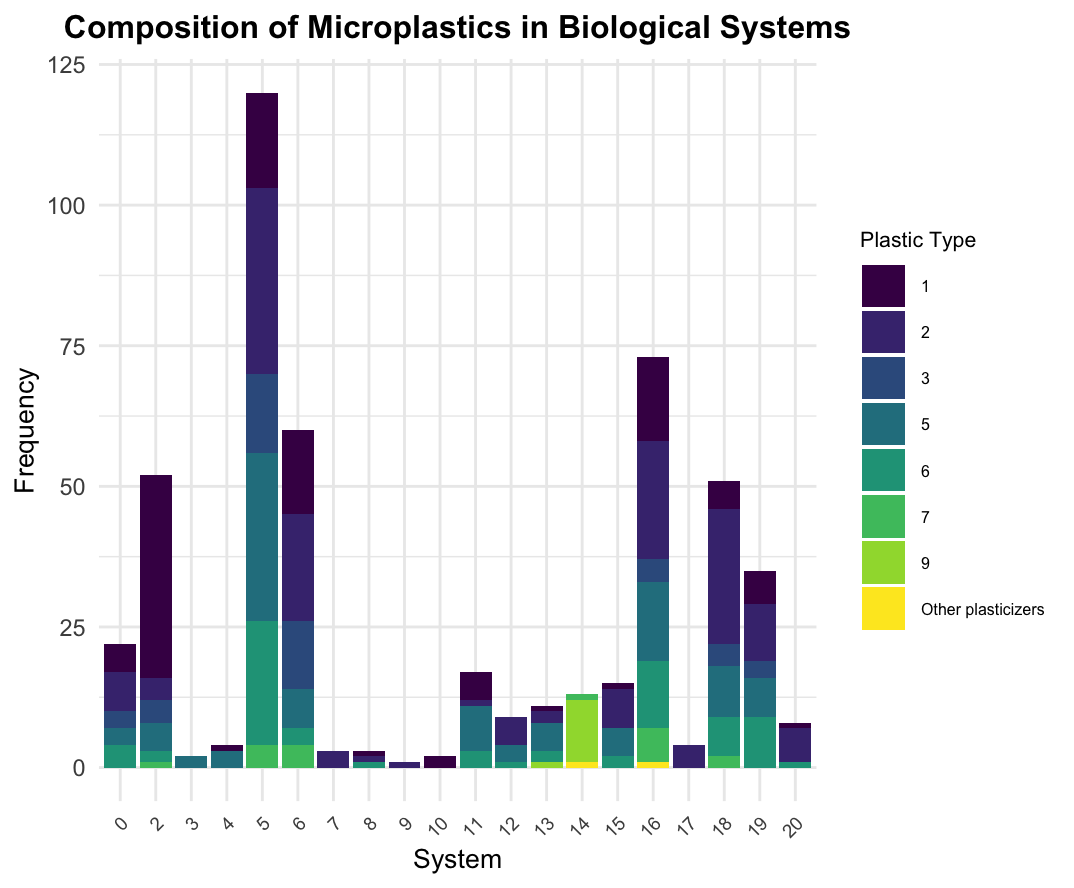
Analysis of tissue samples indicates that certain polymer classes are more likely to be retained, suggesting selective absorption or slower degradation rates. This may point to biochemical interactions between specific microplastic types and human biological pathways.
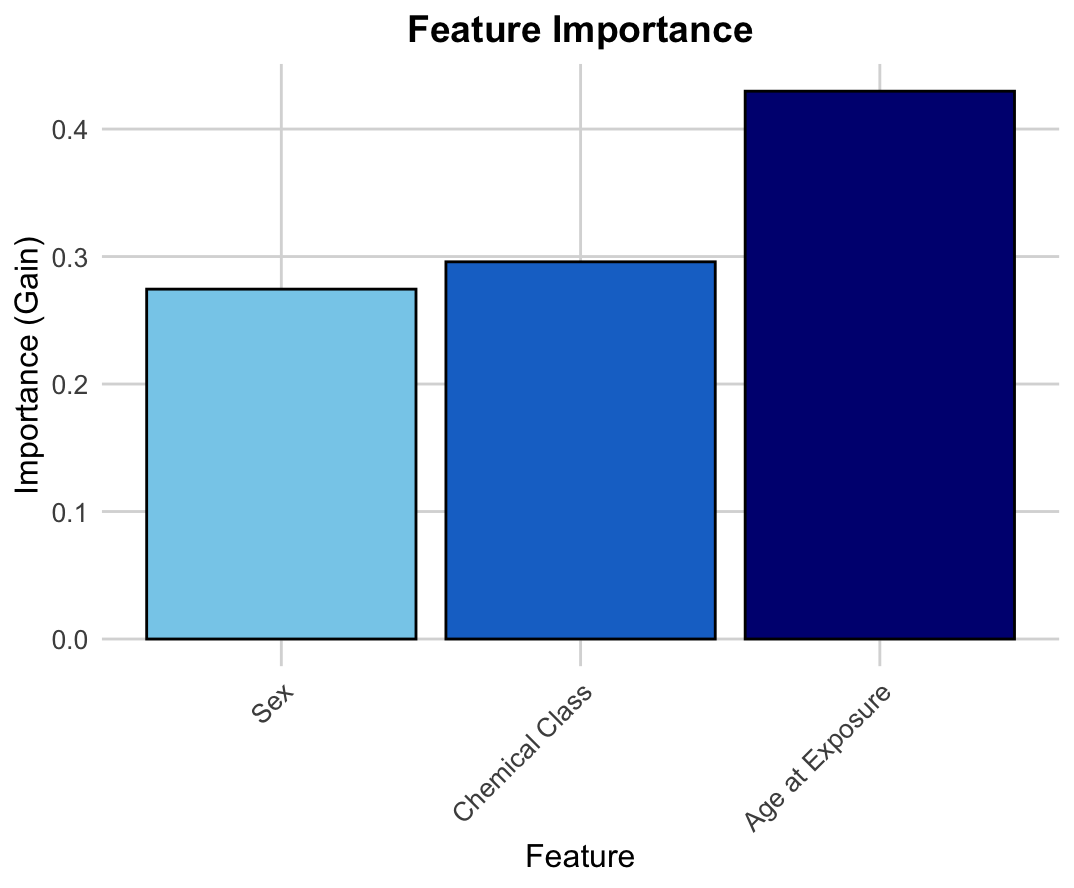
Feature importance analysis reveals that chemical class and age at exposure are dominant predictors of microplastic retention. This supports the hypothesis that both developmental biology and polymer properties influence bioaccumulation trends.
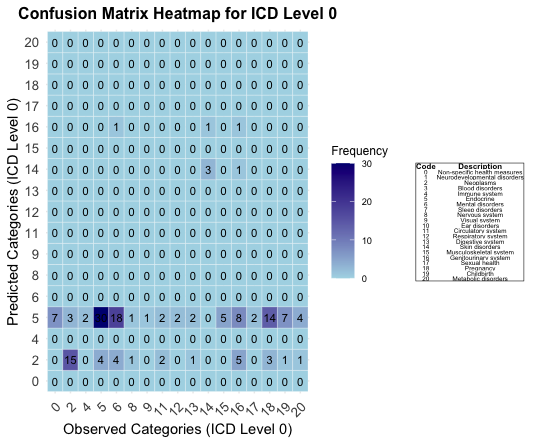
Machine learning model validation through a confusion matrix highlights strong classification accuracy, but misclassifications indicate limitations in dataset variability. Further refinement of input parameters is necessary to improve predictive precision.
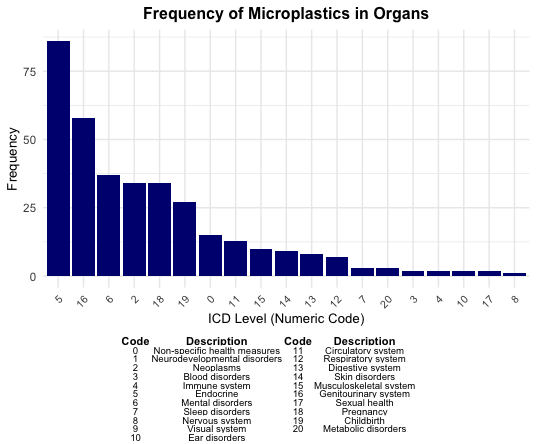
Data shows significant variability in microplastic distribution among different organ systems. The gastrointestinal and hepatic systems show the highest concentrations, supporting theories of ingestion as a primary exposure route.